


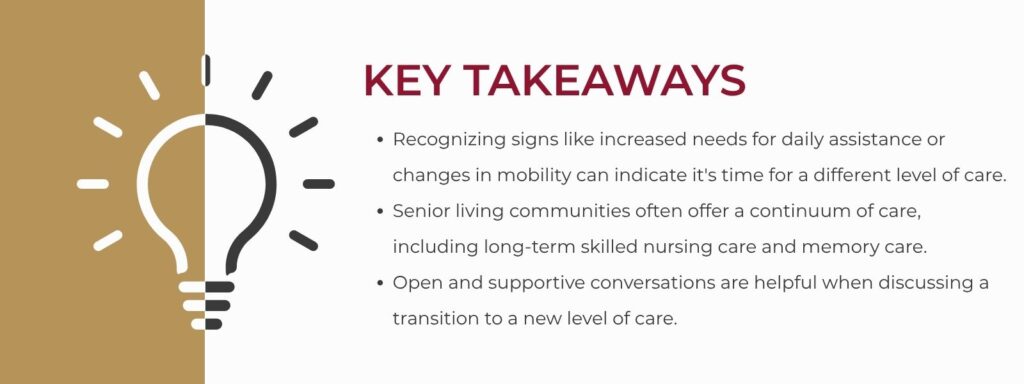
Key Takeaways
- Recognizing signs like increased needs for daily assistance or changes in mobility can indicate it’s time for a different level of care.
- Senior living communities often offer a continuum of care, including long-term skilled nursing care and memory care.
- Open and supportive conversations are helpful when discussing a transition to a new level of care.
Moving into a senior living community is a wonderful step toward finding the right support. But as life continues, personal needs can evolve. It’s a natural part of the journey.
When assisted living is no longer enough, communities like Fairview Senior Living often provide other options, such as long-term skilled nursing care or memory care, to offer more focused support.
Recognizing When Needs Change in Senior Living
A supportive assisted living community offers a great balance of independence and help. As a person’s health journey continues, however, their needs may call for more specialized attention. Understanding the different levels of care, from skilled nursing to memory care, can help you find the right fit for every chapter.
Increased Assistance with Daily Activities
You may notice a loved one needs more help with daily routines like bathing, dressing, or meals. At Laurel Place Assisted Living, this support is already part of everyday care. Our LNAs assist with activities of daily living (ADLs), supported by 24/7 nursing on-site. These needs are often well supported within our community, while changes in mobility may signal the need for additional evaluation or adjustments.
Changes in Mobility or Physical Health
An increase in falls or difficulty getting around can be a concern. New or progressing health conditions may also require more consistent medical oversight. These physical changes often mean a higher level of care would be beneficial.
Shifts in Cognitive Abilities
Sometimes, changes are related to memory and thinking. You might see increased confusion, forgetfulness that impacts safety, or trouble with familiar routines. When these shifts happen, it may be time to consider moving from assisted living to memory care, which can provide comfort and security.
Growing Social or Emotional Needs
A person may become more withdrawn or show signs of anxiety. If they seem lonely or aren’t engaging in activities as they once did, it could be a sign. A different setting might offer more tailored social engagement.
Exploring Options Beyond Assisted Living
When care needs change, it’s comforting to know there are other supportive options available. Many senior living communities are designed to adapt as residents’ needs grow. This allows for smooth transitions to the right level of support.
Long-Term Skilled Nursing Care
This type of care is for individuals with ongoing health conditions that require regular medical attention from nurses. Our long-term skilled nursing care provides around-the-clock support and supervision. This helps manage more complex health situations.
Dedicated Memory Care
Dedicated memory care offers a specialized environment for those experiencing cognitive changes. The focus is on creating a safe, structured, and engaging atmosphere. Routines and familiar activities help residents feel comfortable and secure.
Short-Term Rehabilitation
Sometimes, a person may need focused support to recover from a surgery, illness, or injury. Rehabilitation services provide therapies to help them regain strength and independence. It’s a temporary step toward getting back to their regular routine.
What Does Long-Term Skilled Nursing Care Offer?
Long-term skilled nursing care provides continuous support for those with more involved health needs. It offers peace of mind by having a professional team available 24/7. The goal is to provide comfort and consistent medical management in a supportive setting, complete with programs and amenities to enhance quality of life. Long-term skilled nursing offers:
- 24/7 nursing care and supervision
- Medication and pain management
- Support with incontinence and wound care
- Social services and case management
- Specialized nutrition and meal plans
Understanding the Role of Memory Care
Memory care is thoughtfully designed for people with Alzheimer’s or other forms of dementia. It’s a unique form of senior living that offers a calm, structured environment. Knowing what to expect from a memory care community can be reassuring—the daily flow is predictable, with activities designed to be engaging and enjoyable. Memory care offers:
- Staff trained in dementia care.
- Secure and comfortable living spaces.
- Personalized assistance with daily tasks.
- A full schedule of community activities.
- Nutrition management and dining support.
How to Talk About Changing Care Needs
Bringing up the idea of moving to a different level of care can feel challenging. Approaching the conversation with empathy and understanding can make all the difference. The focus should be on working together to find a solution that feels good for everyone.
Choose a Calm and Comfortable Setting
Find a quiet and familiar place to talk where you won’t be interrupted. A relaxed setting can help everyone feel more at ease. This allows for a more open and honest conversation.
Focus on Safety and Well-Being
Frame the discussion around health, safety, and comfort. Explain that the goal is to find a place that can provide the right amount of support. Following some tips for transitioning a loved one can help shift the focus from what is being lost to what can be gained.
Listen to Their Thoughts and Concerns
Allow your loved one to share their feelings and worries without interruption. Acknowledging their perspective shows respect and care. It’s important they feel heard throughout the process, as this can be a stressful time for everyone involved, so remember to look after your own well-being, too.
Include Them in the Decision-Making Process
Whenever possible, make decisions together. Tour communities or review information as a team. Feeling involved can help a person feel more in control of their future.
Finding the Right Support for Every Stage
Changing needs are a normal part of life, and having the right support makes every stage more fulfilling. From assisted living to long-term skilled nursing care, there is a setting designed to provide comfort, safety, and compassionate attention. Finding the right environment allows your loved one to live with dignity and joy.
At Fairview Senior Living, we are here to help your family navigate these transitions. We invite you to schedule a tour to learn more about our different levels of care. Contact us today to see how we can support you.
Not sure which level of care is the right fit?
Take our free 4-minute assessment to help identify the level of support that may best match your loved one’s needs. It’s a simple first step before scheduling a tour.