

Key Takeaways
- Gentle, low-impact exercise can help maintain the strength and balance needed for daily activities.
- Simple movements like chair squats, single-leg stances, and gentle stretches can be done safely at home.
- Start slowly, create a safe space for movement, and build a consistent routine for best results.
- A supportive community can provide motivation and programs tailored to your needs.
Why Gentle Movement Matters for Your Health
Staying active helps you feel your best so you can continue doing the things you love. At communities like Fairview Senior Living, the focus is on supporting your overall well-being. Whether it’s tending to your garden, playing with your grandkids, or simply moving through your day with ease, regular movement supports your independence.
Gentle, low-impact exercises are an effective way to maintain strength and balance, making daily activities easier and helping reduce the risk of falls. You don’t need intense workouts to see results. Small, consistent movements can make a significant difference in how you feel each day.
How Gentle Activity Supports Your Daily Life
Think about all the movements you make throughout the day. Getting up from a chair, carrying groceries, or walking to the mailbox all require strength and balance. When you incorporate gentle exercise into your routine, you’re supporting the muscles that help you perform these tasks with confidence and ease.
Your muscles are your body’s support system. When your leg and core muscles are strong, they help keep you steady on your feet, which is the foundation of good balance. Because strength and balance work together, focusing on simple exercises can help you feel more stable and secure as you move through your day.
Low-Impact Exercises to Try at Home
You can improve your strength and balance without ever leaving home. These simple and effective exercises require little to no equipment and are designed with safety and accessibility in mind. A sturdy chair can be a helpful tool for support.
Seated Strength Movements
- Chair Squats: Sit at the edge of a sturdy chair and practice standing up, then slowly sitting back down. This builds strength in your legs and core.
- Seated Marching: Sit tall and lift one knee toward your chest, then the other, as if marching in place.
- Arm Curls: Hold light weights, water bottles, or soup cans and curl them toward your shoulders to build arm strength.
- Leg Extensions: Sit in a chair and extend one leg straight out in front of you, hold briefly, then lower it slowly.
Balance and Stability Activities
- Single Leg Stance (with Chair Support): Hold onto the back of a sturdy chair and lift one foot off the ground. Try holding for 10-15 seconds.
- Heel-to-Toe Walk: Walk in a straight line, placing the heel of one foot directly in front of the toes of the other. Use a wall for support if needed.
- Side Leg Raises (with Chair Support): While holding onto a chair, slowly lift one leg out to the side, keeping it straight. Lower it and repeat on the other side.
Gentle Stretches for Flexibility
- Neck Stretches: Gently tilt your head from side to side, holding each stretch for a few seconds.
- Ankle Rotations: While seated, lift one foot off the floor and slowly rotate your ankle in circles in both directions.
- Shoulder Rolls: Sit or stand tall and gently roll your shoulders up, back, and down to release tension.
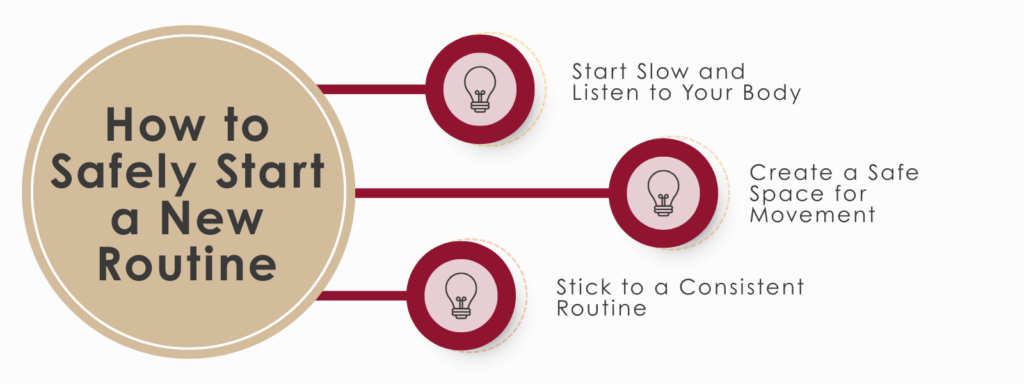
How to Safely Start a New Routine
Beginning a new physical activity routine can be an exciting step toward feeling stronger. With a few practical tips, you can set yourself up for success and incorporate movement into your day at a comfortable pace.
Start Slow and Listen to Your Body
There’s no need to rush. Begin with just a few repetitions of each exercise and see how you feel. Your body will let you know when you’re ready for more. If something causes discomfort, it’s okay to stop. The goal is to build a positive habit, not push yourself too hard.
Create a Safe Space for Movement
Set up your exercise area with safety in mind. Wear comfortable, supportive shoes and keep a sturdy chair nearby for balance. Clear away any trip hazards like rugs or cords, and have water within reach to stay hydrated.
Stick to a Consistent Routine
Consistency is more important than intensity. A short, 15-minute session of gentle movement each day can be more beneficial than one long workout once a week. This approach aligns with recommendations for fitness as you age, where consistency is key to reaping long-term benefits for your physical and mental health.
How Community Life Encourages Activity
Being part of a supportive environment can make staying active much more enjoyable. When you’re surrounded by opportunities and encouragement, movement becomes a natural and engaging part of daily life.
The Social Benefits of Group Activities
There’s something motivating about being active with others. Group exercise classes offer a chance to connect with friends while you move. Sharing the experience adds encouragement and makes exercise feel less like a chore and more like a social event.
Programs Tailored to Your Needs
Many senior living communities offer programs designed to support a range of fitness levels and abilities. At Laurel Place Assisted Living, residents enjoy options like chair yoga and balance classes. At Fairview Rehabilitation, targeted therapy helps rebuild strength and restore independence. At Fairview Skilled Nursing, gentle daily movement, along with fun, low-impact games, supports mobility while keeping activities engaging and enjoyable. At The Inn at Fairview Memory Care, light physical activity is incorporated into daily routines to support both physical health and cognitive engagement.
A Positive Path to Strength and Stability
At Fairview Senior Living, we understand that every person’s journey is unique. Our focus is on creating a supportive environment where you can feel comfortable, happy, and fulfilled. If you’re unsure what level of support is right for you or a loved one, a simple senior living assessment can help guide the way. To learn more, we invite you to reach out for more information.